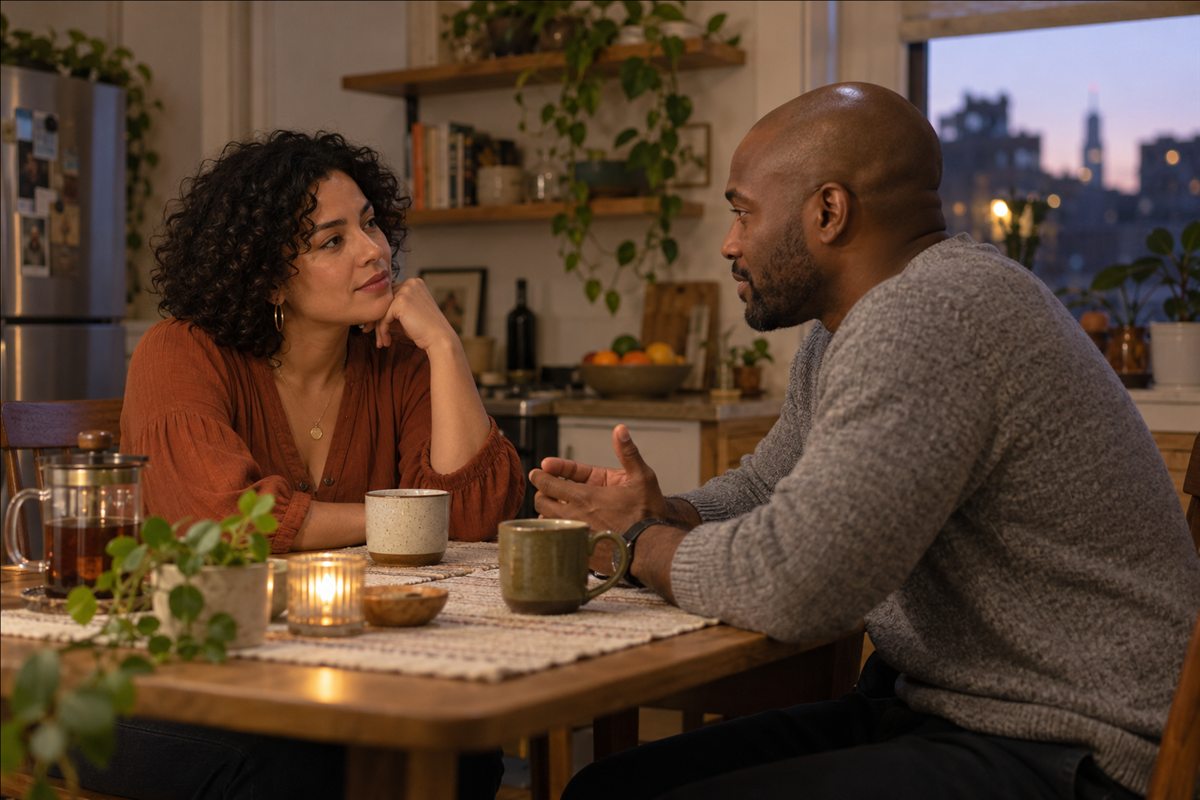
You are explaining what you are open to and learning what they want. Neither person has to promise a future together to answer honestly.
The practical difficulty is often deciding what to ask now and what can wait. A useful conversation starts with your present intentions, then becomes more specific as your decisions begin to affect each other.
Know what you mean before asking
“I want something serious” can describe several different things. You may mean exclusivity, a long-term partnership, marriage, or simply dating people who are open to commitment.
Write a private sentence about your goal. Then write what you can offer in your current life.
You might want a long-term relationship and have room for one or two dates a week. You might want to explore a connection but know that relocation is likely within a few months.
Both pieces matter. A goal describes your direction; your circumstances describe what another person would actually experience.
If you are uncertain, identify the part you do know. You can be unsure about marriage while knowing you want an exclusive relationship. You can also be clear that you are not available for commitment at present.
Raise the subject when the answer can guide a choice
There is no universal date number for this conversation. Ask when the answer affects whether you want to keep investing time or take another step.
If a major difference would end the possibility for you, an early conversation can prevent assumptions. You may want to ask about wanting children, plans to move, or whether the person is currently open to a relationship.
Choose a calm moment with enough time for an answer. Avoid introducing a major question as someone is leaving for work, during an argument, or as a condition for physical intimacy.
Relationship education organization love is respect notes that unspoken expectations can become standards the other person never agreed to. Asking directly gives both people a chance to explain.
Share your position before asking for theirs
A question can feel less like an examination when you explain why you are asking.
You could say, “I’d like a committed relationship eventually, while taking time to get to know someone. What are you open to at the moment?”
Or, “I’ve enjoyed our dates. I’m not asking us to decide anything today, but I’d like to understand whether a relationship is something you want.”
If you prefer casual dating, say that clearly too. “I enjoy spending time with you, and I’m not available for a committed relationship. I want to be honest about that.”
The examples are suggested wording. Adjust them to match what you can genuinely offer. Avoid adding reassurance about a future you have no intention of exploring.
Then stop talking long enough to hear the answer.
Clarify broad answers with one useful question
If someone says they are “seeing what happens,” you do not need to decide immediately whether the phrase is reassuring or worrying. Ask what it means for their present choices.
You might respond, “Are you open to a committed relationship if we find we are compatible, or would you prefer to keep dating casual?”
If they say they want something serious, you can ask what that looks like in practice. The answer might concern exclusivity, shared time, or a long-term plan.
Do not turn one conversation into a complete negotiation about your next five years. Start with the uncertainty that affects your next decision.
A clear answer can still be disappointing. The value of the conversation includes discovering a difference before either person assumes agreement.
Separate a shared goal from a shared commitment
Two people can both want a long-term relationship without being ready to become exclusive with each other. Agreement about direction gives you a reason to keep learning; it does not establish every term of the relationship.
If you want exclusivity, ask about that specific choice. “I’d like to date each other exclusively. Is that something you want too?”
Discuss what the agreement means to each of you. Do not assume spending several nights together or meeting friends has already settled it.
If you are not ready, be direct about the present answer. “I’m interested in continuing, but I’m not ready to agree to exclusivity.”
The other person can then decide whether continuing suits them. Being honest does not remove their right to want something different.
Respond to a mismatch without negotiating away your goal
If one person wants commitment and the other does not, you can acknowledge the difference without making either person the problem.
“Thank you for being clear. I’m looking for a relationship, so continuing this way would be difficult for me. I’m going to step back.”
You do not need to prove that your preferred goal is more mature or valid. You also do not have to agree to a situation you already know will leave you unhappy.
Be careful with a plan to wait for someone to change. They may change, but you cannot make an informed decision on that possibility alone. Consider the relationship they are offering now.
If you choose to keep dating despite uncertainty, explain what you are agreeing to. Do not silently treat patience as a promise they never made.
When goals align but schedules do not
For professionals with demanding work, agreement about commitment may still leave a practical gap. Discuss what regular time together could look like.
A useful question is, “What kind of time could you realistically make for dating during the next few months?”
A person may want a relationship while having very little availability. You can respect that and decide it does not fit your needs.
You can also test a modest plan. Agree on a regular meeting or a way to handle travel weeks, then notice whether it works for both of you. A trial should be mutually understood, rather than a private test the other person can unknowingly fail.
Revisit the conversation when something changes
You do not have to ask for a full update after every date. Return to the subject when your feelings, circumstances, or proposed commitments change.
That might be before one person relocates, when you want exclusivity, or when you realize your earlier goal no longer fits.
Use your previous conversation as context. “When we first met, I said I was unsure about commitment. That has changed for me, and I’d like to talk about where we are.”
If the other person’s answer has changed, you can ask questions and take time to decide what it means for you. A changed answer does not automatically prove the earlier one was dishonest.
Common questions about dating intentions
Is asking about goals too intense for a first date?
You can ask broadly and respectfully. Keep the question about their general intentions, and avoid requiring a decision about you before you know each other.
What if they say they do not know?
Ask what they do know about their current availability and preferences. Then decide whether that uncertainty is something you want to participate in.
Can I have a timeline?
You can have personal limits around how long you want to remain uncertain. Explain them honestly as information about your own decision, without using them to force someone to agree.
Before your next conversation, write one sentence about what you want and one question that would help you choose what to do next. Keep both specific enough for the other person to answer.